Relevance AI wins this comparison 5–3. It is the stronger choice for teams building dedicated AI Agents, multi-Agent systems, Knowledge-heavy workflows, and Agent evaluation.
Zapier wins in three areas that can matter more for some teams:
- Choose Zapier if your Agent needs access to the broadest app ecosystem.
- Choose Zapier if AI should handle selected decisions inside a larger deterministic automation.
- Choose Zapier if your organization already manages a large automation estate through Zapier and wants AI inside the same governance layer.
Choose Relevance AI when:
- the Agent itself is the system you are building;
- you need several specialist Agents working through a visual Workforce;
- Knowledge retrieval needs more configuration;
- formal Agent evaluation matters;
- or you want to start experimenting with Agents and Tools before paying.
Relevance AI vs Zapier at a glance
| Category | Winner and why |
|---|---|
| Dedicated Agent building | Relevance AI. The platform is structured around building and operating Agents. |
| Hybrid AI + deterministic automation | Zapier. AI reasoning sits inside the same Zap as conventional automation. |
| App integrations | Zapier. 9,000+ apps versus 2,000+ documented Relevance AI integrations. |
| Multi-Agent orchestration | Relevance AI. Workforces give specialist Agents, Tools, Conditions, and handoffs a dedicated visual canvas. |
| Knowledge and RAG | Relevance AI. More control over retrieval, chunking, reranking, embeddings, and citations. |
| Agent testing and evaluation | Relevance AI. Enterprise Evals support scenarios, Checks, monitoring, and Workforce evaluation. |
| Enterprise governance | Zapier. AI controls sit inside a mature automation administration and governance layer. |
| Starting value for Agent builders | Relevance AI. The Free plan includes unlimited Agents and Tools plus one Workforce. |
Final score: Relevance AI 5, Zapier 3.
Zapier Agents is moving into AI by Zapier
Zapier’s Agent experience changed substantially in 2026.
AI by Zapier with looping Tool calls became generally available on July 15, 2026. Zapier is moving standalone Agents into Zaps, where the Agent-style reasoning runs through an AI by Zapier step.
A migrated Agent carries over:
- its prompt and instructions;
- its connected Tools;
- and its trigger.
The result is a Zap that can combine AI reasoning with the rest of Zapier’s automation system.
AI by Zapier can currently:
- select AI models;
- use app actions as Tools;
- use supported Knowledge sources;
- call Tools repeatedly when needed;
- return structured outputs;
- and pass results into later Zap steps.
Zapier still documents a few migration gaps. Some Knowledge sources available in standalone Agents, including HubSpot, Asana, Zendesk, Zoom, and Jira, are scheduled to come to AI by Zapier later.
This comparison therefore focuses on Relevance AI vs the current AI by Zapier Agent experience, while preserving the existing Zapier Agents search intent and URL.
1. Relevance AI wins dedicated Agent building
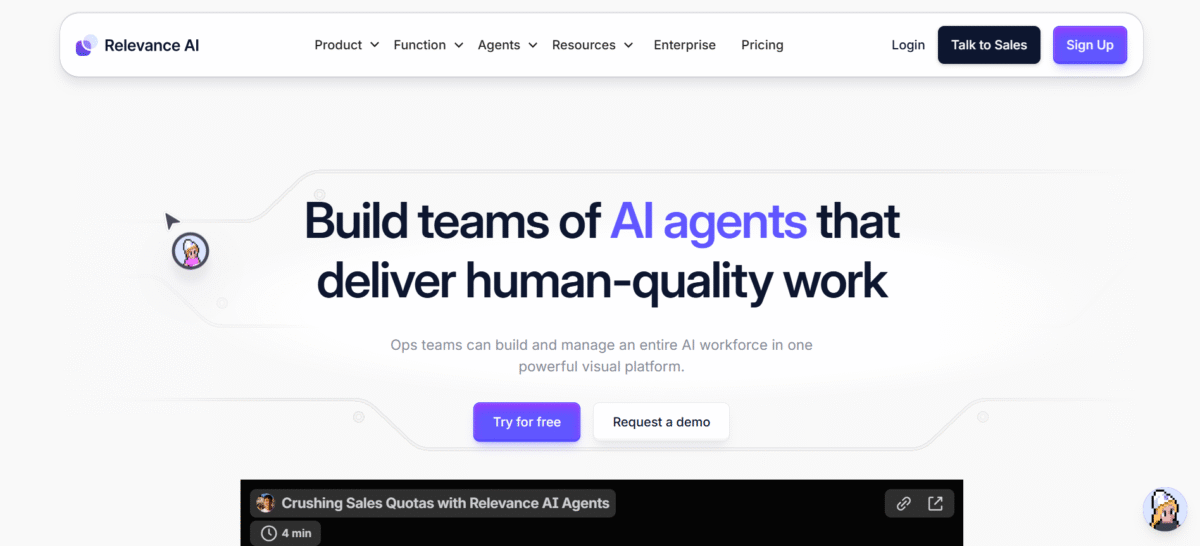
Relevance AI gives you a clearer environment for designing an AI worker around a specific business responsibility.
An Agent can have its own:
- Prompt;
- Tools;
- Knowledge;
- Triggers;
- Memory;
- model configuration;
- variables;
- alerts;
- and other Agent settings.
This works well when different Agents need different responsibilities.
For example:
- Research Agent: web research, company Knowledge, and research Tools.
- Qualification Agent: qualification criteria, CRM context, and escalation rules.
- CRM Agent: restricted CRM Tools and approval before important writes.
- Support Agent: support Knowledge, ticketing Tools, and customer-facing instructions.
AI by Zapier can also reason, use Tools, and take actions. Its Agent functionality lives inside a Zap step, which makes the workflow itself the main organizing structure.
Relevance AI gives dedicated Agent systems a clearer home.
Winner: Relevance AI. Running score: Relevance AI 1, Zapier 0.
2. Zapier wins hybrid AI and deterministic automation
Zapier is stronger when AI should control only part of the process.
A Zap can combine:
- triggers;
- AI by Zapier;
- Filters;
- Paths;
- Formatter;
- Delay;
- Looping;
- Sub-Zaps;
- Tables;
- Forms;
- code;
- and ordinary app actions.
A support workflow could run like this:
- New ticket → AI classifies the request → Path routes it → fixed app action runs → approval when required → help desk record updates.
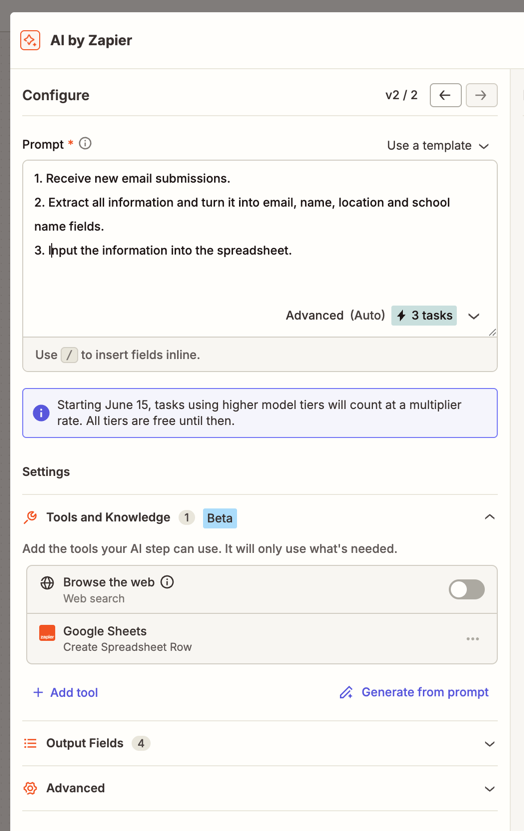
This structure gives the model control where judgment is useful while keeping known business rules fixed.
Relevance AI can also combine Agents, Tools, Triggers, Conditions, and mandatory next steps. Zapier offers a larger collection of conventional automation components around the AI step.
Winner: Zapier. Running score: 1–1.
3. Zapier wins app integrations
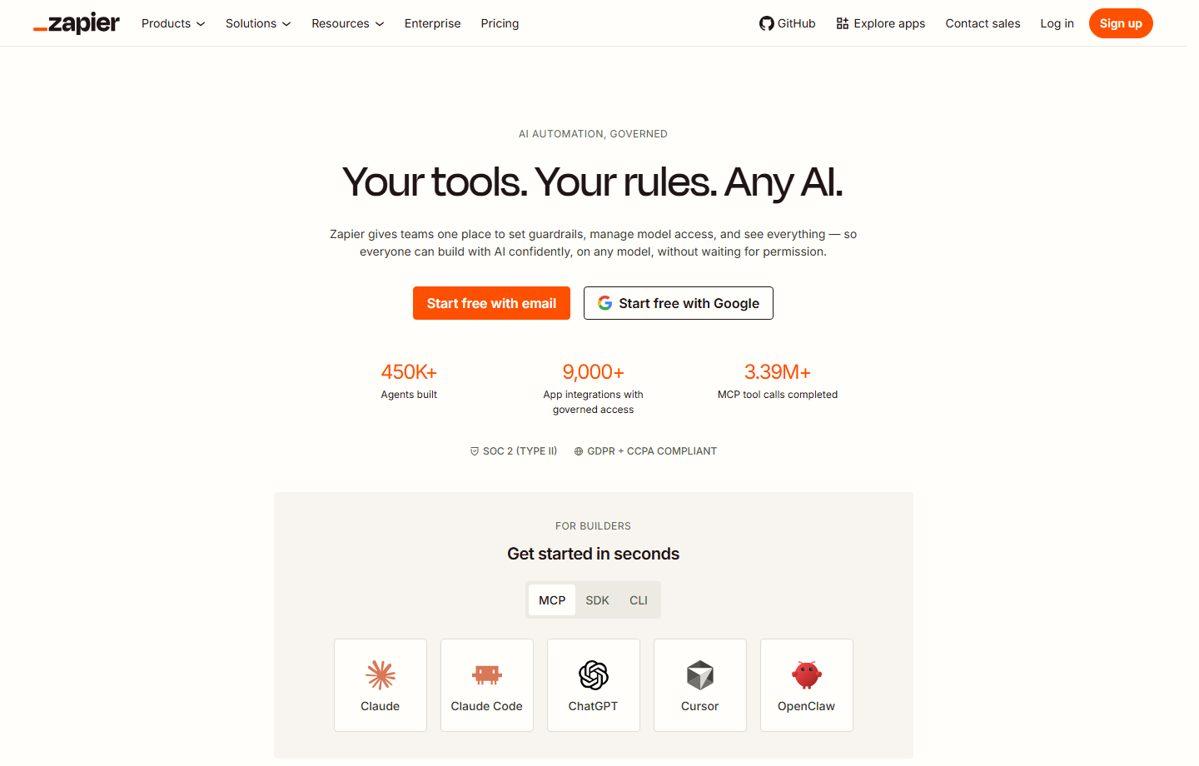
Zapier currently connects to 9,000+ apps.
Relevance AI currently documents:
- 2,000+ app integrations;
- 1,000+ app triggers;
- custom apps;
- and API integrations.
Both cover many common business systems. Zapier becomes more attractive when your workflow relies on niche or industry-specific software.
Check the exact operation you need before choosing either platform.
- Can the integration trigger the workflow?
- Can it read the required object?
- Can it create or update the required record?
- Does the action require a higher plan?
- Are there provider limits or extra usage charges?
Integration count helps with discovery. The exact trigger and action determine whether the workflow can actually run.
Winner: Zapier. Running score: Zapier 2, Relevance AI 1.
4. Relevance AI wins multi-Agent orchestration
Relevance AI Workforces are designed specifically for coordinating specialist Agents and other workflow components.
A Workforce can contain:
- Agents;
- Tools;
- Triggers;
- Conditions;
- AI-directed handoffs;
- mandatory next steps;
- and approval rules.
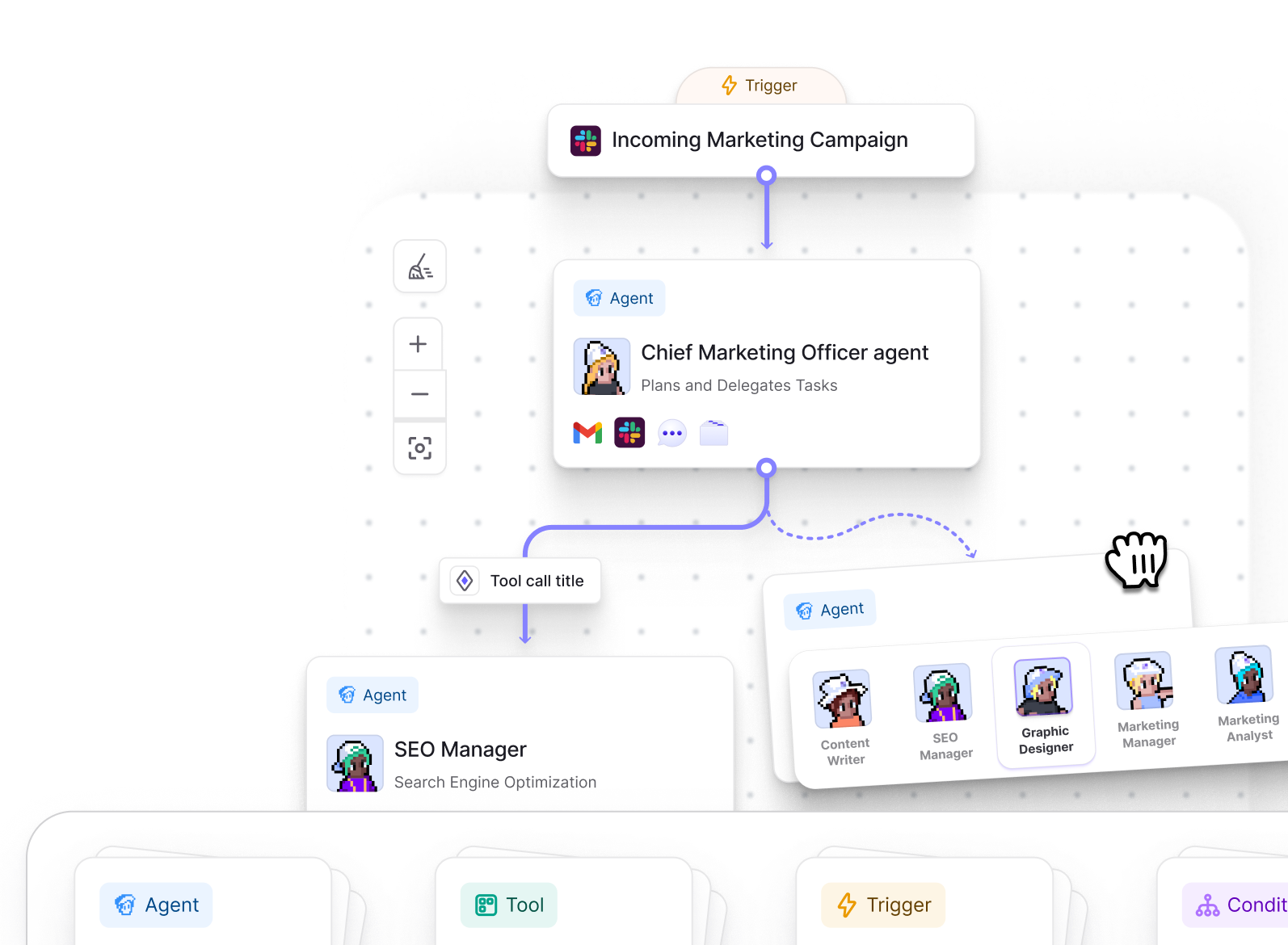
A sales Workforce might use:
- Research Agent → Qualification Agent → Outreach Agent → CRM Tool
Zapier can build multi-Agent patterns too. During migration, Zapier instructs users whose Agents call other Agents to convert the receiving Agent into a Sub-Zap and point the parent workflow to it.
That approach works well for modular automation. Relevance AI makes the specialist roles and handoffs easier to inspect on one visual canvas.
Relevance AI currently has one important constraint: Agent-to-Agent communication through Workforce connections is one-way. Design around directional handoffs when using Workforces.
Winner: Relevance AI. Running score: 2–2.
5. Relevance AI wins Knowledge and RAG controls
AI by Zapier supports Knowledge sources including:
- Box;
- Confluence Cloud;
- Dropbox;
- Google Docs;
- Google Drive;
- Microsoft SharePoint;
- Notion;
- and uploaded files.
AI by Zapier can decide when a Knowledge source should be used as a Tool.
Relevance AI provides a deeper retrieval configuration layer.
Advanced Knowledge Search can control:
- vector search;
- keyword search;
- hybrid search;
- fields used for retrieval;
- chunking;
- reranking;
- embedding models;
- citations;
- and result processing.
Those settings are useful when Knowledge quality starts affecting Agent accuracy and you need to diagnose retrieval rather than only change the prompt.
Winner: Relevance AI. Running score: Relevance AI 3, Zapier 2.
6. Relevance AI wins formal Agent evaluation
Zapier gives you useful workflow testing and run visibility.
You can inspect:
- AI output;
- which Tools the AI called;
- what those Tool calls did;
- task usage;
- and complete Zap test results.
Relevance AI adds a dedicated Evals layer for measuring Agent quality.
Its current Evals system can:
- run repeatable scenarios;
- score results with Checks;
- evaluate individual Agents;
- evaluate complete Workforces;
- monitor live Agent work;
- set minimum pass rates;
- and connect publishing decisions to evaluation results.
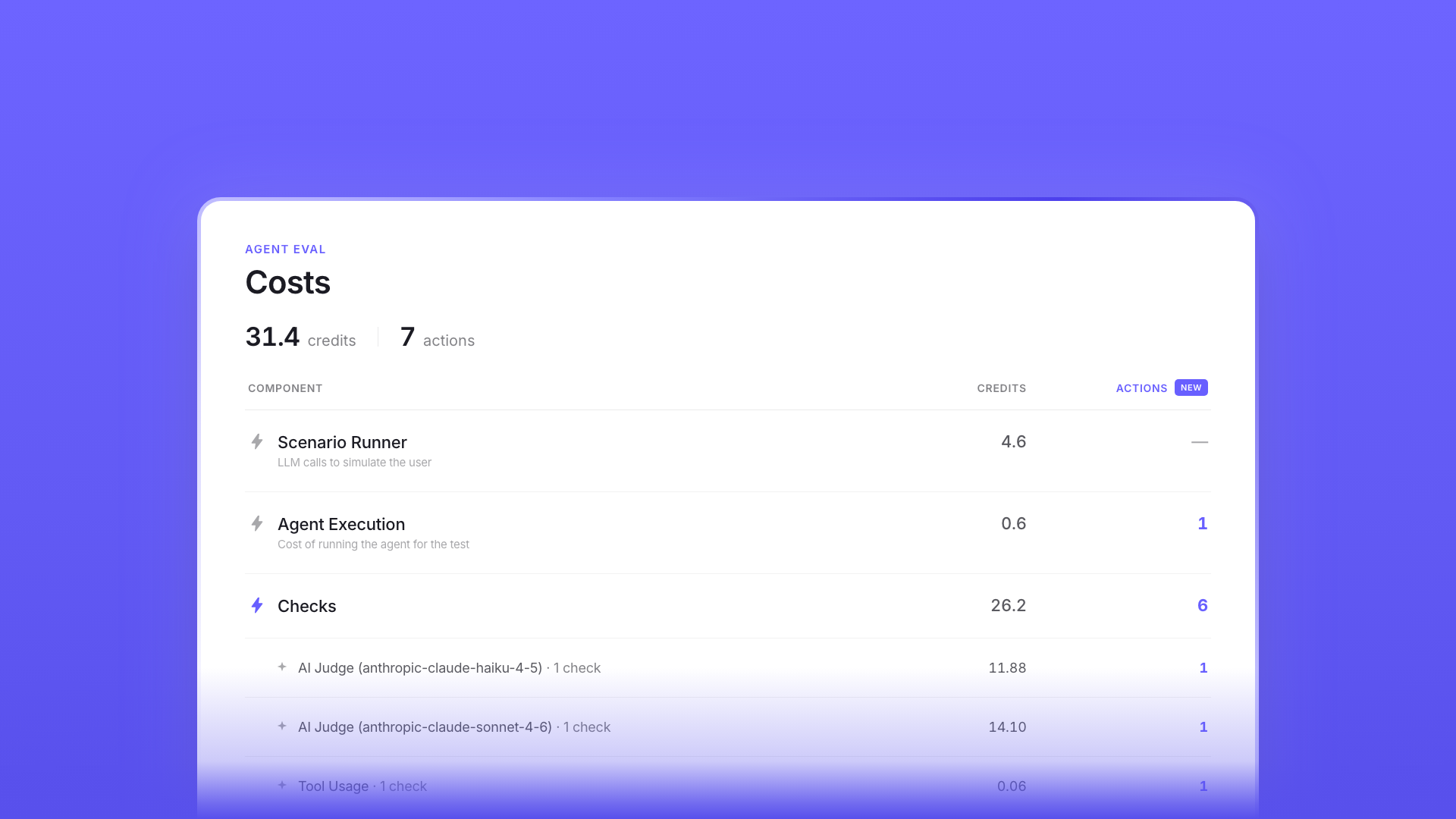
Formal Evals become particularly useful for workflows such as:
- lead qualification;
- customer support;
- document review;
- research;
- and other work where people act on the Agent’s output.
Relevance AI currently gates Agent Evaluations to Enterprise.
Winner: Relevance AI. Running score: Relevance AI 4, Zapier 2.
7. Zapier wins enterprise automation governance
Zapier is the stronger choice when AI needs to operate inside an existing company-wide automation program.
Current Zapier controls include:
- account-level control over Agentic Tool calling;
- publishing approval processes for Zaps with AI steps;
- advanced admin permissions;
- app controls;
- action restrictions;
- custom data-retention settings;
- observability;
- and broader Enterprise administration.
AI by Zapier also pauses a run for review when one AI step reaches 75 tasks.
Relevance AI Enterprise has substantial governance capabilities too:
- SAML SSO;
- role-based access control;
- audit logs;
- Work Hour Controls;
- multi-organization management;
- Agent Evaluations;
- and custom implementation.
Zapier has the advantage for organizations already using its automation platform at scale because Agentic workflows inherit the broader Zapier control plane.
Winner: Zapier. Running score: Relevance AI 4, Zapier 3.
8. Relevance AI wins starting value for Agent builders
Relevance AI’s current Free plan includes:
- 200 Actions per month;
- 1,000 one-time Vendor Credits;
- unlimited Agents;
- unlimited Tools;
- one Workforce;
- one user;
- and one project.
Relevance AI Pro costs:
- $29/month on monthly billing;
- $19/month with annual billing.
Zapier’s current platform pricing starts at:
- Free: $0 with 100 tasks per month;
- Professional: from $19.99/month;
- Team: from $69/month;
- Enterprise: custom pricing.
AI by Zapier’s current feature documentation lists it for Professional, Team, and Enterprise. Agentic Tool use requires the Advanced or Premium model tiers.
Zapier’s AI task calculation can increase usage quickly
AI by Zapier currently prices model tiers at:
- Standard: 1x tasks, without Tools;
- Advanced: 3x tasks, with Tool use;
- Premium: 5x tasks, with Tool use and more complex reasoning;
- Bring Your Own Key: 1x task rate.
Zapier calculates usage as:
- base model rate + each successful Tool call at the same model rate.
A Premium run with two successful Tool calls therefore uses:
- 5 tasks for the AI step;
- 10 tasks for the two Tool calls;
- 15 tasks total.
New AI by Zapier steps currently default to Premium according to Zapier’s latest model-tier documentation.
Relevance AI uses a different model:
- Actions count Tool runs;
- Vendor Credits cover AI model and eligible Tool costs.
Neither usage model can be compared reliably from subscription price alone. Build a representative workflow and measure it.
Relevance AI gets this category because its Free plan currently gives an Agent builder more room to build Agents, connect Tools, and test one Workforce before paying.
See our Relevance AI pricing guide and Actions and Vendor Credits guide for the Relevance AI side of the calculation.
Winner: Relevance AI. Final score: Relevance AI 5, Zapier 3.
Relevance AI vs Zapier: which should you choose?
Frequently Asked Questions About Relevance AI vs Zapier
Is Relevance AI better than Zapier for AI Agents?
Relevance AI is the stronger choice when you are specifically building dedicated AI Agents, multi-Agent Workforces, Knowledge-heavy systems, or workflows that need formal Agent evaluation. Zapier is stronger when AI needs to operate inside a broader automation stack.
What happened to Zapier Agents?
Zapier is moving standalone Agents into AI by Zapier inside the Zap editor. Migrated Agents become Zaps with an AI by Zapier step containing their prompt and connected Tools. AI by Zapier with looping Tool calls became generally available on July 15, 2026.
Can AI by Zapier call Tools like an Agent?
Yes. Advanced and Premium AI by Zapier tiers can use supported app actions and Knowledge sources as Tools. The AI can decide which Tools to call based on the prompt and can make multiple Tool calls during a run.
Which has more integrations, Relevance AI or Zapier?
Zapier. Its current platform documentation lists more than 9,000 app integrations. Relevance AI currently documents more than 2,000 apps, more than 1,000 app triggers, and support for custom apps and API integrations.
Which is better for multi-Agent workflows?
Relevance AI has the clearer dedicated multi-Agent interface through Workforces. Zapier can build Agent-to-Agent patterns with Zaps and Sub-Zaps, but its architecture remains more workflow-oriented.
Which is cheaper, Relevance AI or Zapier?
Relevance AI Pro starts at $29 per month or $19 per month billed annually. Zapier Professional starts at $19.99 per month. Production cost depends on actual usage because Relevance AI charges through Actions and Vendor Credits while AI by Zapier uses task multipliers and additional tasks for successful Tool calls.
Can I use AI by Zapier on the Free plan?
Zapier’s current AI by Zapier feature documentation lists the product as available on Professional, Team, and Enterprise. Zapier’s Free platform plan still includes 100 monthly tasks and other automation features, but paid access is required for the current AI by Zapier Agentic workflow experience.