Relevance AI vs Lindy: Custom Agent Platform or Ready-Made Assistant?
Contents
Choose Relevance AI to design custom systems and multi-agent Workforces. Choose Lindy for a packaged assistant that runs inbox, calendar, meetings, and follow-up. The products overlap, but they begin from different operating assumptions. Relevance AI treats the agent as a specialist worker with instructions, tools, knowledge, triggers, tasks, and optional coordination through a Workforce. Lindy is strongest when ready-made assistant work is the main requirement.
Relevance AI vs Lindy at a glance
| Decision area | Relevance AI | Lindy |
|---|---|---|
| Primary orientation | Custom agents and multi-agent Workforces | Packaged personal assistant for inbox, calendar, meetings, and follow-up |
| Best fit | Teams designing repeatable agent workflows across several functions | Individuals and teams wanting fast assistant setup with fewer design decisions |
| Build style | Visual builder, Inventor, Marketplace, APIs, webhooks, and MCP | Assistant configured around connected inboxes, calendar, meetings, text, and app integrations |
| Hosting | Managed SaaS | Managed SaaS |
| Integrations | 2,000+ apps documented, plus APIs, webhooks, knowledge sources, and MCP | 100+ integrations listed on the current Plus plan |
| Controls | Approvals and escalations; advanced Evals and governance are plan-gated | User approval for messages; Enterprise adds SSO, SCIM, audit logs, and company context |
| Starting paid price | Pro: $19/month annually or $29 monthly | Plus: $49.99/month |
Disclosure: Toolfountain may earn a commission if you buy through some links, at no extra cost to you.
The core difference
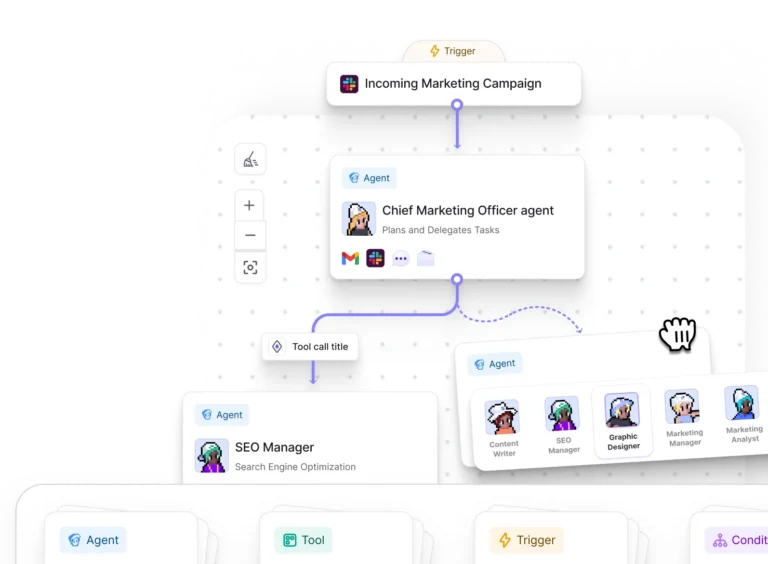
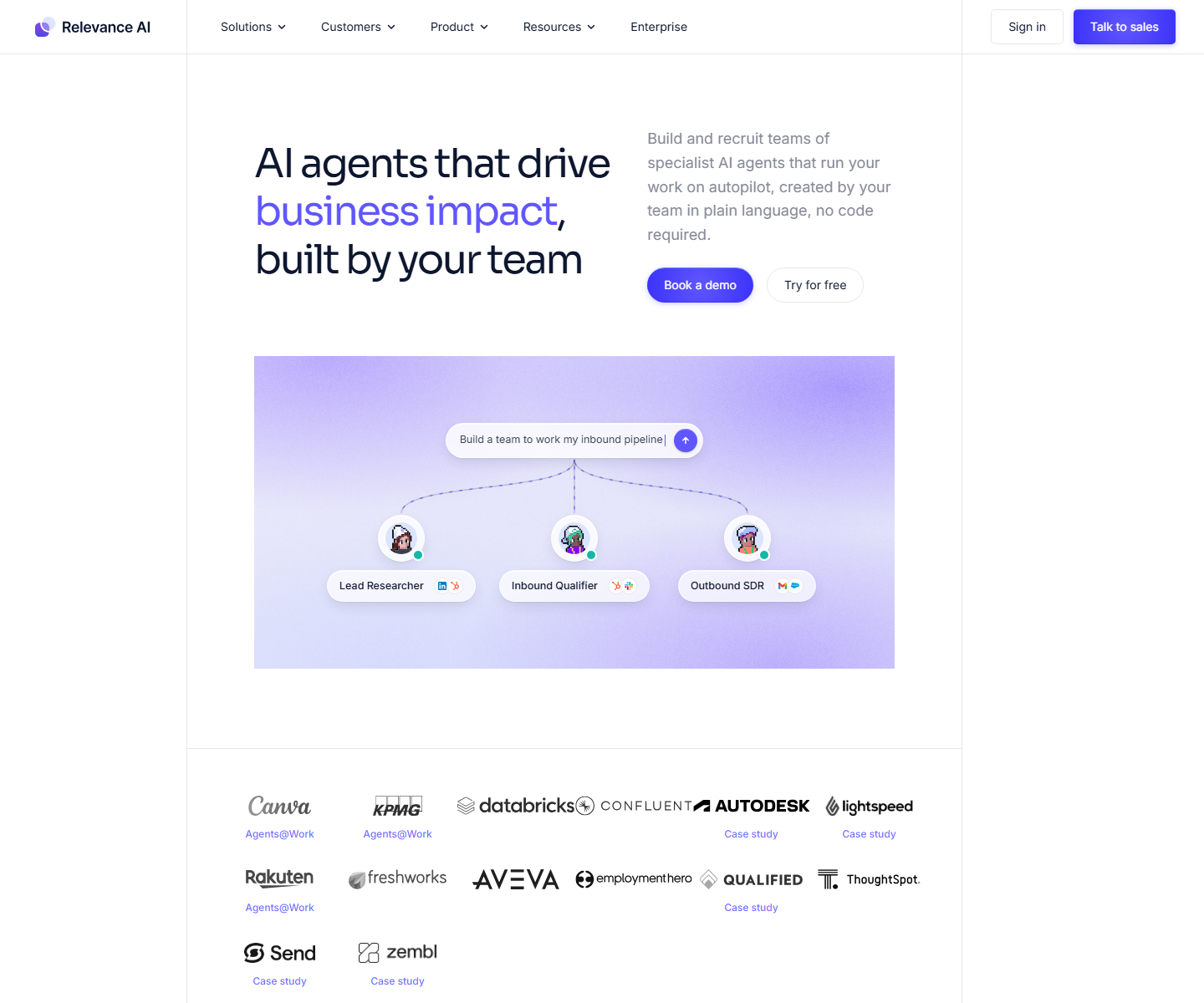
Relevance AI is organized around agents and Workforces. You give an agent a job, connect tools and knowledge, choose triggers and channels, then test and monitor the result. A Workforce coordinates several specialized agents with conditions and handoffs.
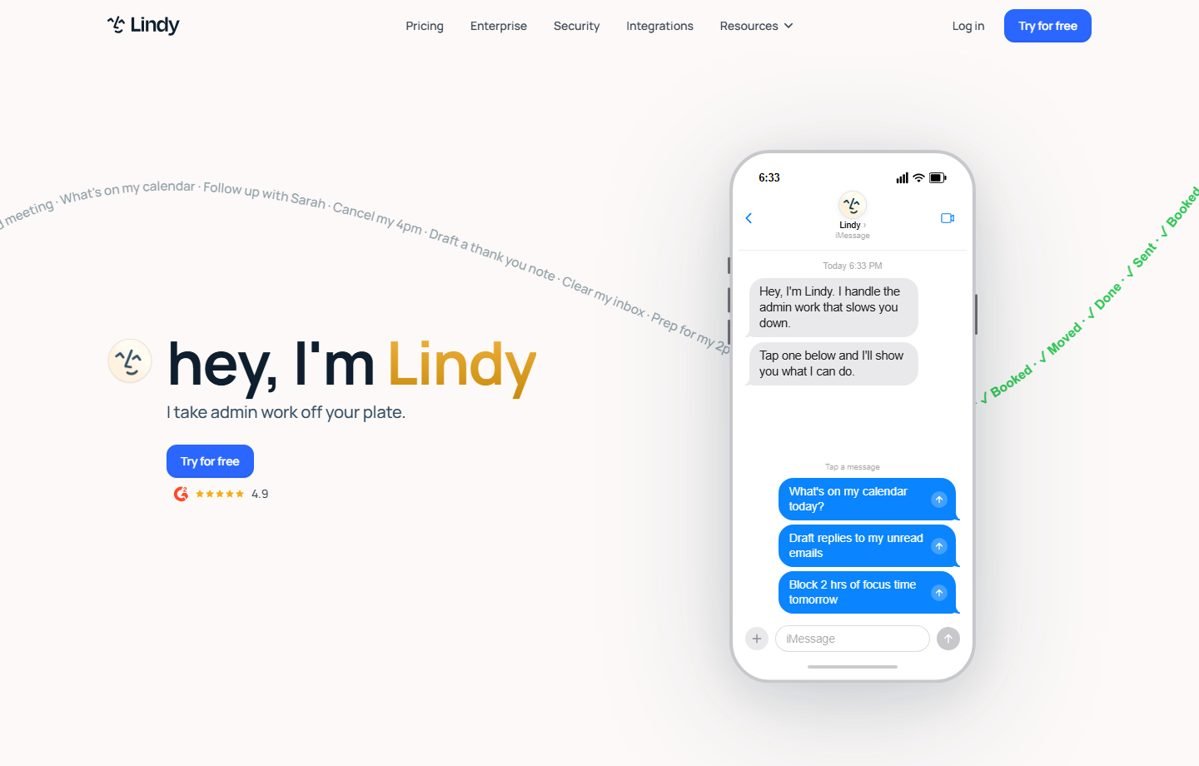
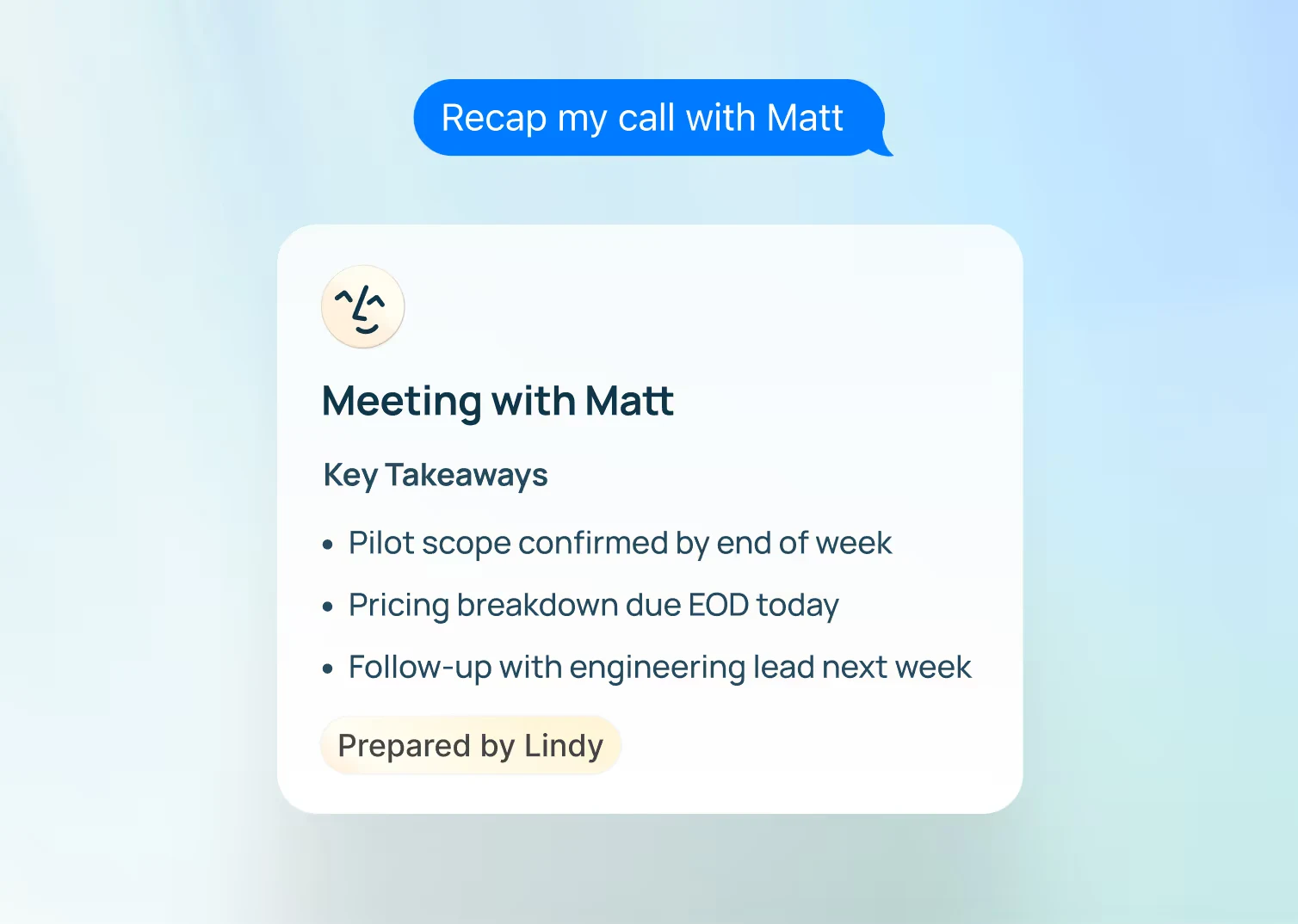
Lindy is better understood through its strongest operating model: fast setup, packaged assistant behavior, texting through iMessage or SMS, and meeting workflows. That difference affects who owns the system, how failures are debugged, what the pricing unit means, and how much surrounding infrastructure you need.
Where Relevance AI is stronger
- Custom agent systems: the product combines agent building, knowledge, tools, triggers, Workforces, task operations, monitoring, and enterprise controls.
- Business-function coverage: official use-case libraries span sales, customer success, marketing, support, operations, HR, and research.
- Agent quality: Enterprise Evals support scenarios, reusable Checks, publish gates, and live monitoring.
- Model flexibility: paid plans can bring their own model keys, while Relevance AI also supplies Vendor Credits.
- Controlled autonomy: escalations, human approvals, work-hour controls, queues, and task views help teams introduce agents gradually.
Where Lindy is stronger
- Its core specialization: fast setup, packaged assistant behavior, texting through iMessage or SMS, and meeting workflows.
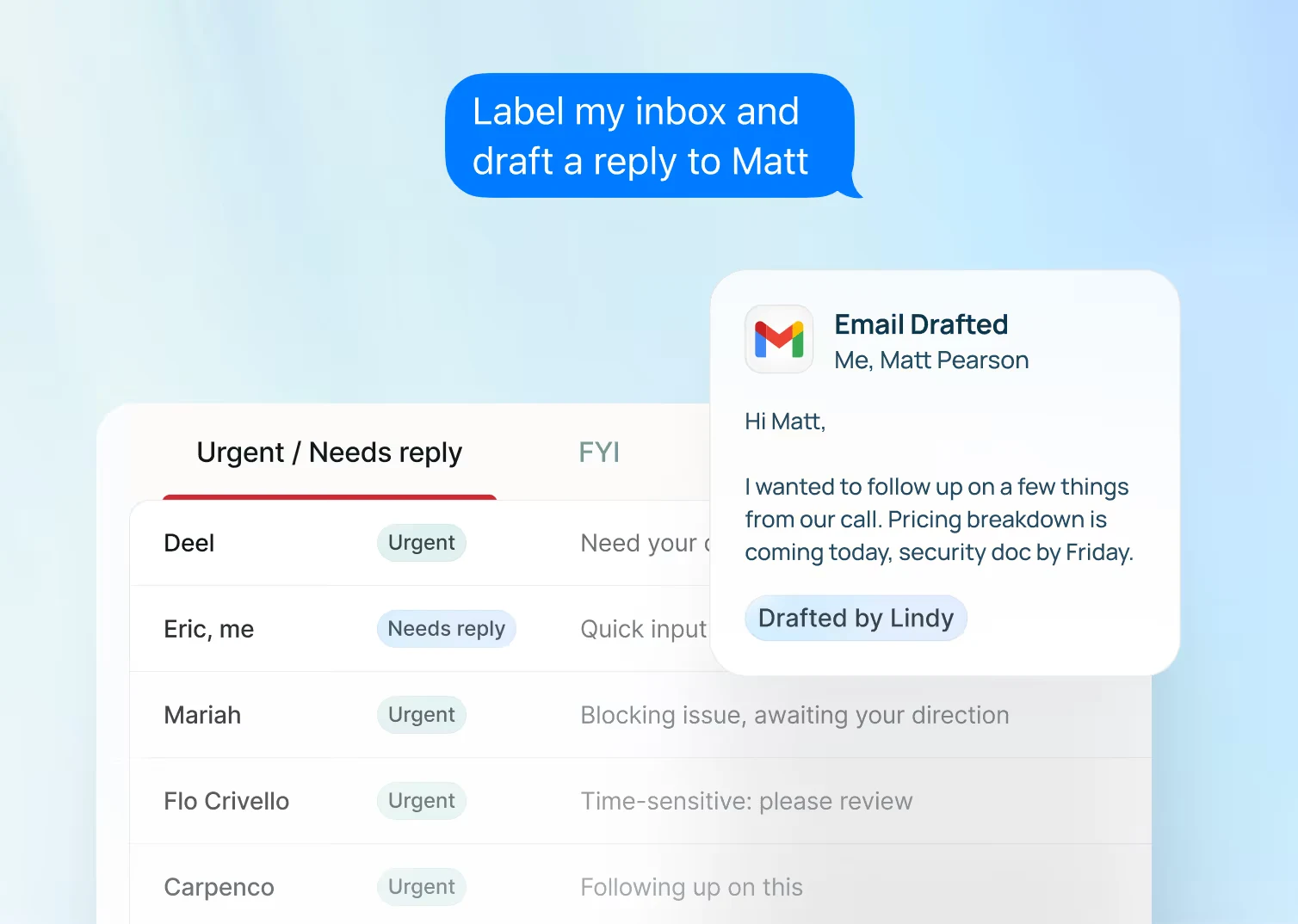
- Buyer fit: it is designed for individuals and teams that want a ready-made assistant for inbox, calendar, meetings, and follow-up.
- Lower switching friction in its native environment: teams already standardized on its ecosystem can reuse existing connections, skills, identity, or data models.
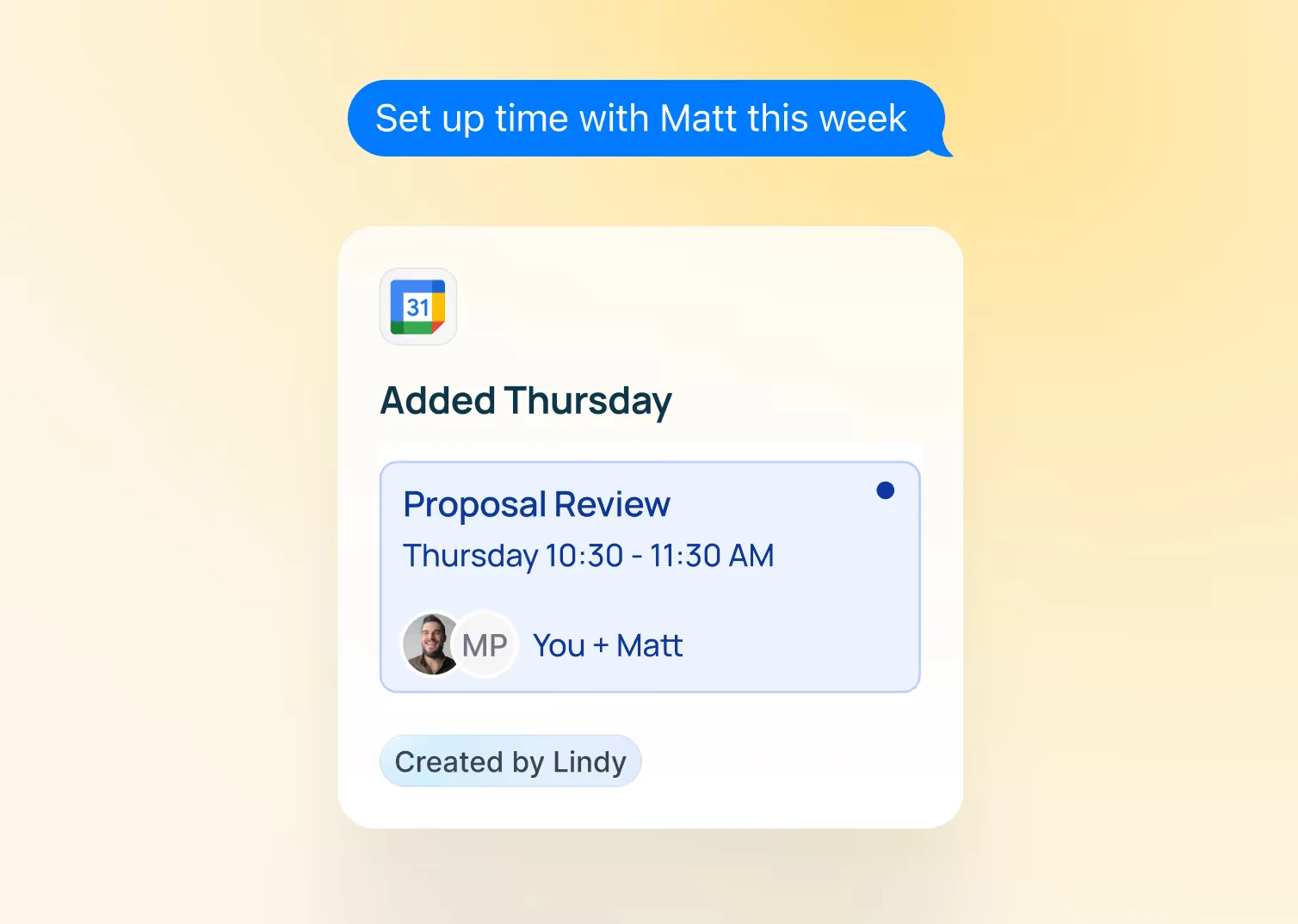
The main tradeoff is that Lindy’s packaged assistant model is less suited to teams designing a deeply customized multi-agent operating system across many departments.
Building and maintaining workflows
Relevance AI offers three practical build paths. Business users can configure agents visually, Inventor can draft and edit assets from natural-language requests, and technical users can work through APIs, webhooks, JavaScript SDKs, or MCP-compatible coding assistants.
Lindy uses a different authoring model. Evaluate how clearly your team can inspect the logic, version changes, test edge cases, identify failed steps, and hand ownership to another person. A fast demo is not enough if the workflow will run customer-facing or revenue-critical work.
Integrations and data access
Relevance AI documents 2,000+ app integrations, 1,000+ app triggers, custom apps, API integrations, popular integrations, integrated knowledge sources, and MCP connections. Some premium and enterprise triggers are plan-gated, so a logo in a directory does not prove that every desired trigger and action is available on your tier.
For Lindy, inspect the exact connector, authentication method, available triggers and actions, rate limits, and whether the integration is native, API-based, or dependent on another automation layer.
Testing, monitoring, and governance
Relevance AI puts A/B testing on Pro and above, Analytics on Team, and Agent Evals, SSO, RBAC, audit logs, work-hour controls, and custom implementation on Enterprise. Its Evals can simulate users, score conversations with reusable Checks, block publishing when required tests fail, and sample production tasks.
Compare that with Lindy at the level your use case needs. A personal research helper does not need the same controls as an agent that sends messages, changes CRM records, or handles sensitive employee data.
Pricing comparison
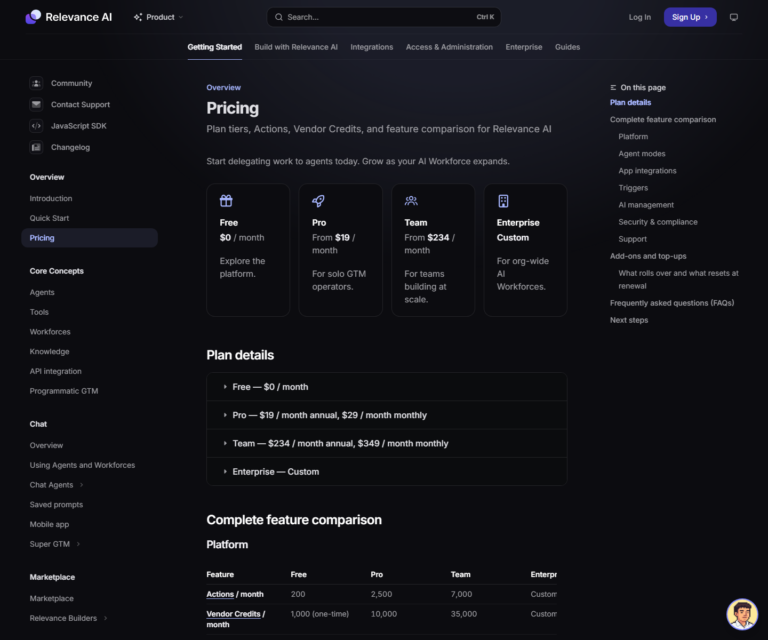
Relevance AI starts with a free plan, then Pro at $19 a month annually or $29 monthly, Team at $234 a month annually or $349 monthly, and custom Enterprise pricing. Usage is split between Actions and Vendor Credits.
Lindy lists Plus at $49.99 a month, Pro at $99.99, Max at $199.99, and custom Enterprise pricing. Its pricing page also advertises a seven-day trial. These units are not directly comparable with Relevance AI’s Actions and Vendor Credits, so price the same completed workflow and expected monthly volume.
Which should you choose?
- Choose Relevance AI when custom agent systems and a managed cross-functional agent platform are the priority.
- Choose Lindy when ready-made assistant work defines the project.
- Run a pilot when both can complete the task. Use the same data, success criteria, monthly volume, and approval rules.
Also read the Relevance AI Actions and Vendor Credits guide and the full Relevance AI review before committing.
Disclosure: Toolfountain may earn a commission if you buy through some links, at no extra cost to you.
FAQs
Is Lindy cheaper than Relevance AI?
Not at the entry paid tier: Lindy Plus is currently $49.99 monthly, while Relevance AI Pro is $19 monthly when billed annually or $29 month to month. Actual value depends on usage, included capabilities, and whether you need a packaged assistant or custom workflows.
Can Relevance AI replace Lindy?
It can replace overlapping agent or automation workflows, but it may not replace Lindy where that product’s native ecosystem, hosting model, or specialist data layer is the main reason for using it.
Which is easier for nontechnical users?
Relevance AI provides a visual builder and Inventor, but production agents still require process design and testing. Lindy may be easier or harder depending on whether its native workflow matches the task.
Which has better integrations?
Count the exact triggers and actions you need. Directory size alone is not enough, especially when premium connectors, enterprise triggers, or custom API work are involved.
Which is better for enterprise deployment?
Both may fit, but the answer depends on identity, data residency, audit, role permissions, observability, support, and the systems already standardized across the company.
Related Relevance AI guides