Relevance AI vs n8n: Which Is Better for AI Agents?
Contents
Relevance AI wins 5–4 for a buyer specifically choosing an AI Agent platform. n8n wins if self-hosting, code-level control and deterministic automation matter more than having a dedicated Agent and Workforce model.
The difference is not that one can use AI and the other cannot. Both can. Relevance AI starts from the worker and gives it Tools, Knowledge and a Workforce. n8n starts from the workflow and lets you add AI Agent nodes where judgment is useful.
Relevance AI vs n8n at a glance
| Category | Winner | Why |
|---|---|---|
| Agent-first onboarding | Relevance AI | Relevance AI |
| Deterministic automation | n8n | n8n |
| Self-hosting | n8n | n8n |
| Multi-Agent orchestration | Relevance AI | Relevance AI |
| Knowledge and RAG | Relevance AI | Relevance AI |
| Integration breadth | Relevance AI | Relevance AI |
| Technical extensibility | n8n | n8n |
| Testing access | n8n | n8n |
| Hosted starting point | Relevance AI | Relevance AI |
1. Relevance AI is easier to approach as an Agent builder
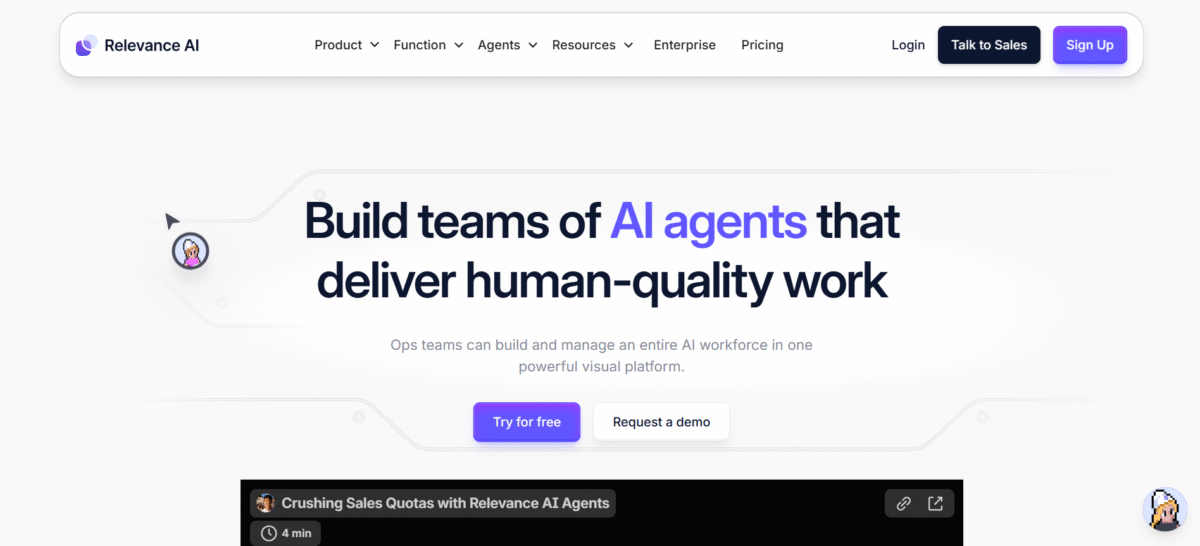
Relevance AI organizes the product around Agents, Tools, Knowledge, Triggers and Workforces. Invent can create a starting Agent from a natural-language description, which makes the mental model clear for a team that specifically wants an AI worker.
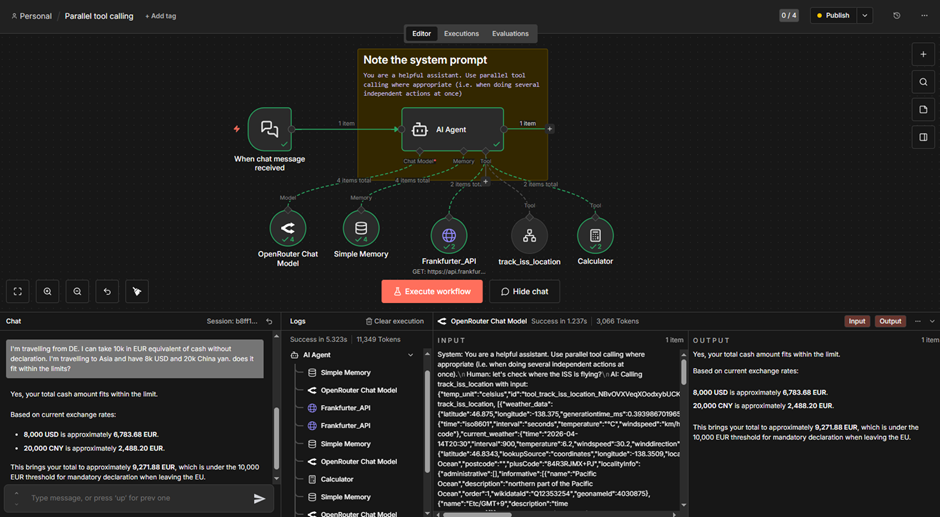
n8n is approachable for a workflow builder, but you still think in nodes, data mapping, credentials and execution paths.
2. n8n is stronger for deterministic workflow logic
n8n is a workflow automation platform first. Routers, branches, transformations, code, APIs and fixed execution logic are the core product rather than supporting infrastructure around an Agent.
If 80% of the process should run predictably and only 20% needs AI judgment, n8n often gives you the cleaner architecture.
3. n8n wins self-hosting and deployment control
n8n has a self-hosted Community Edition plus paid self-hosted options. That gives technical teams more control over infrastructure, networking and sensitive data flows.
Relevance AI is a managed Agent platform. That is easier operationally, but it is not the same deployment proposition.
4. Relevance AI has the clearer visual multi-Agent system
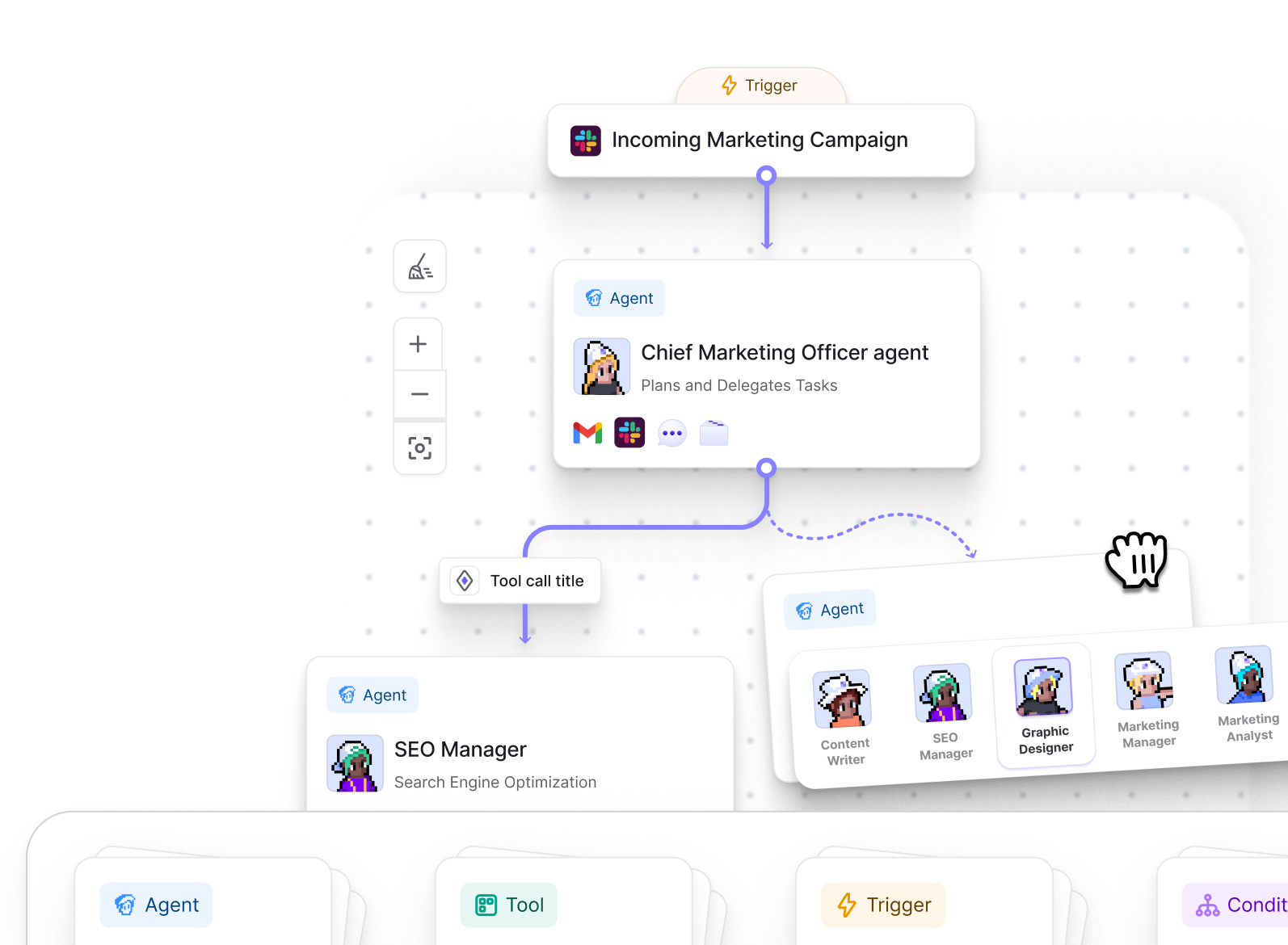
Relevance AI Workforces put specialist Agents, Tools, Conditions and handoffs on one canvas. n8n can orchestrate multiple AI Agent nodes and sub-workflows, but the system remains a workflow graph rather than a dedicated visual team of workers.
5. Relevance AI makes Knowledge and RAG easier to manage
Relevance AI gives Knowledge its own product model around the Agent. That is easier for nontechnical teams that want to connect company information and reason about retrieval separately from the rest of the workflow.
n8n can build sophisticated retrieval pipelines, but doing so pushes you closer to workflow engineering.
6. Relevance AI advertises the larger integration catalog
Relevance AI currently advertises 2,000+ integrations across native and Pipedream-backed connections. n8n’s G2 profile currently describes 500+ integrations, with HTTP requests and custom code available when a native node is missing.
Count alone should not decide the purchase, but Relevance AI has the larger advertised catalog.
7. n8n is more extensible for technical teams
Code nodes, custom nodes, APIs, self-hosting and direct control over workflow data make n8n the stronger technical canvas. Teams that want to inspect JSON, write JavaScript and treat automation as infrastructure will usually prefer it.
8. n8n gives more buyers practical access to AI workflow testing
Relevance AI’s formal Agent Evaluations are strong, but the current pricing table places them on Enterprise. n8n gives technical teams broad workflow testing, run history and debugging without requiring the product to be framed as a formal Agent-evaluation suite.
For an enterprise buyer that has Relevance AI Evals, this category becomes much closer.
9. Relevance AI is easier to try as a managed Agent platform
Relevance AI gives you a permanent Free plan with 200 monthly Actions and no credit card requirement. You can build an Agent and one Workforce without deploying infrastructure.
n8n also has ways to start cheaply, including self-hosted Community Edition, but that is a different kind of starting point.
What users say about Relevance AI and n8n
Relevance AI currently holds a 4.3/5 rating on G2 from 21 reviews. The recurring pattern is positive around no-code Agent building, flexibility, integrations and multi-Agent work, with more mixed feedback around onboarding, admin controls, usage costs and some UI complexity.
- Ease and versatility: several reviewers describe the platform as approachable for custom Agent building once the core concepts click.
- Integrations and customization: reviewers mention APIs, custom Python and multiple connected business tools as meaningful strengths.
- Trade-offs: some users call out onboarding, documentation, governance controls or credit usage as areas that need attention.
“The Best Platform for Creating Custom Agents”
Leopoldo E., G2
n8n is rated 4.7/5 on G2 from 272 reviews. Users repeatedly praise flexibility, automation power, integrations and self-hosting, while the learning curve, JSON/API concepts and some documentation gaps show up on the negative side.
“I love the flexibility of the self-hosted version”
Renee C., G2
Relevance AI vs n8n: pros and cons
| Relevance AI | n8n | |
|---|---|---|
| Pros | • Dedicated Agent and Workforce model • Permanent free plan • 2,000+ integration catalog • Knowledge and approvals are first-class concepts | • Self-hosting • Code and custom-node flexibility • Excellent deterministic workflow control • Strong G2 user sentiment |
| Cons | • Managed platform only • Two-part usage model • Some enterprise features are plan-gated | • Steeper learning curve for nondevelopers • More workflow plumbing • Complex JSON/API mapping can be intimidating |
Which should you choose?
Choose Relevance AI if…
- You want a dedicated no-code Agent platform.
- A visual Workforce makes multi-Agent ownership easier to explain.
- Knowledge, approvals and Agent-first UX matter more than infrastructure control.
Choose n8n if…
- You need self-hosting.
- Your team is comfortable with APIs, JSON and code.
- Most of the process is deterministic automation with selective AI steps.
- You want automation infrastructure you can extend deeply.
Relevance AI vs n8n FAQs
Is Relevance AI better than n8n?
Relevance AI is better for teams specifically building managed AI Agents and visual multi-Agent Workforces. n8n is better for self-hosting, deterministic automation and technical extensibility.
Can n8n build AI Agents?
Yes. n8n has AI Agent nodes and can combine them with normal workflow nodes, models, memory, tools and sub-workflows.
Which is easier for nontechnical users?
Relevance AI is easier when the goal is Agent building. n8n becomes more technical as workflows involve JSON, APIs, code and complex data mapping.
Which supports self-hosting?
n8n. Its Community Edition can be self-hosted, and it also has paid self-hosted options.